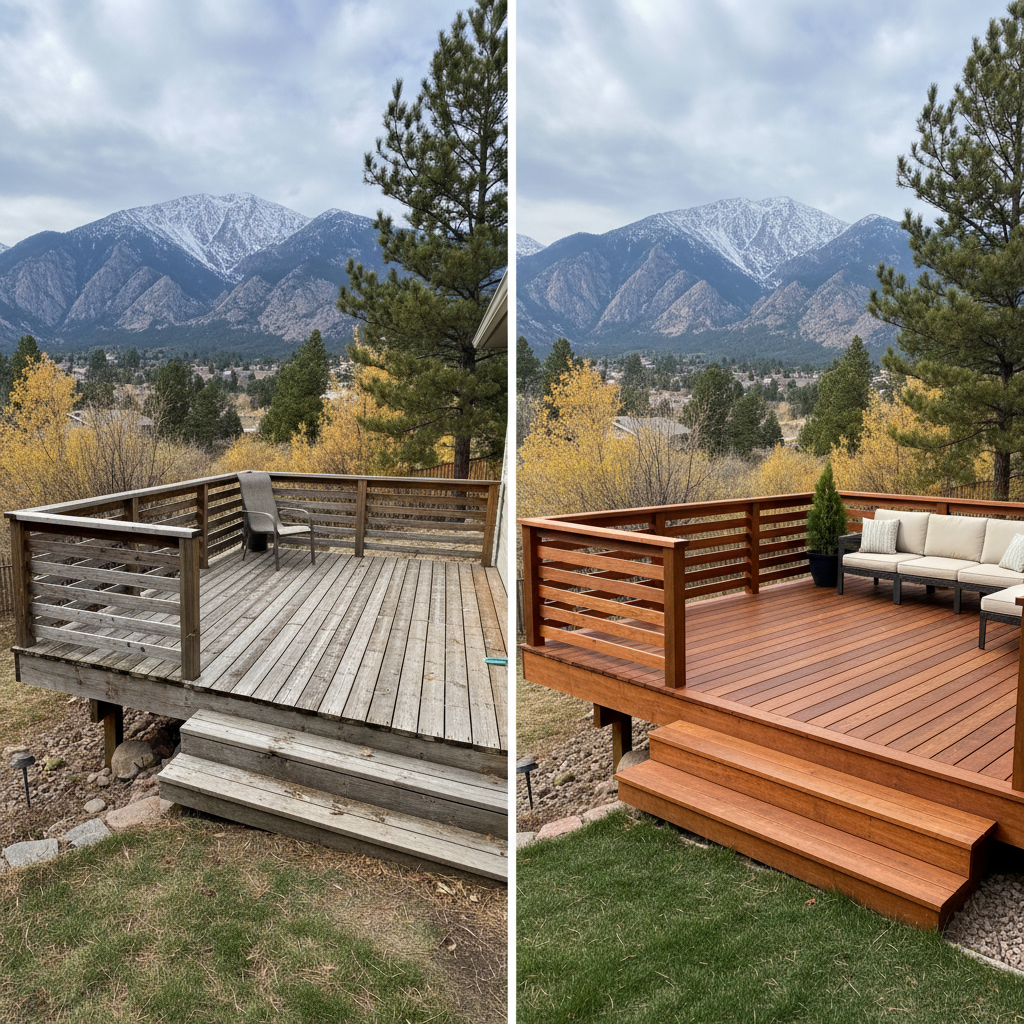
You're thinking about a new wooden deck, and right away, you're faced with choices. Two of the most common options I see folks weighing here in Boulder are pressure-treated lumber and cedar. Both are wood, sure, but they're pretty different animals when it comes to how they'll perform on your property. Let's get into what you need to know.
Pressure-Treated Lumber: The Workhorse
Pressure-treated wood is everywhere, and for good reason. It's typically Southern Yellow Pine or Douglas Fir that's been infused with chemical preservatives under high pressure. This process makes the wood resistant to rot, fungi, and insects – the stuff that usually breaks down untreated wood. It's the go-to for structural components like joists and posts, and often for the decking boards themselves.
Cost
This is where pressure-treated really shines. It's generally the most budget-friendly option for decking material. You're going to pay significantly less upfront for pressure-treated boards compared to cedar, sometimes half the price or even less. If you're building a big deck or working with a tighter budget, this can make a huge difference in the overall project cost.
Durability & Longevity
Because of those chemical treatments, pressure-treated wood is tough. It stands up well to moisture and pests, which is critical in our climate. We get plenty of snowmelt and spring rains, and you don't want your deck rotting out from underneath you. A properly built and maintained pressure-treated deck can easily last 20-30 years, sometimes more. However, it can be prone to warping, twisting, and cracking if not properly dried and maintained, especially with our dry, sunny conditions.
Maintenance
You can't just build it and forget it, even with pressure-treated. You'll need to clean it annually and apply a good quality stain or sealant every 2-3 years. This protects it from UV damage, helps prevent checking and splintering, and keeps it looking good. If you skip this, it'll turn a grayish-green, splinter, and just generally look neglected.
Appearance
Fresh pressure-treated wood has a greenish tint, which fades to a honey-brown and then eventually to gray if left unstained. It's not the most aesthetically pleasing wood right off the bat. The grain isn't particularly distinct or beautiful. It's more about function than form, though a good stain can really transform its look.
Cedar: The Natural Beauty
Cedar, particularly Western Red Cedar, is a premium decking material. It's naturally resistant to rot, decay, and insects due to oils and compounds within the wood itself. It's a softer wood than many pressure-treated options, but it's incredibly stable and beautiful.
Cost
Expect to pay more for cedar. It's a premium product, and its natural resistance and beauty come at a higher price point. Depending on market conditions and the grade of cedar, it can be 1.5 to 3 times the cost of pressure-treated lumber.
Durability & Longevity
Cedar is naturally durable. Those natural oils mean it doesn't need chemical treatment to resist bugs and rot. It's also very stable, meaning it's less likely to warp or twist compared to pressure-treated wood, which is a big plus in our fluctuating Boulder weather. A well-maintained cedar deck can last 15-25 years, sometimes longer. It's a softer wood, though, so it can dent or scratch more easily than some harder woods.
Maintenance
Like pressure-treated, cedar needs maintenance. You'll want to clean it annually. To preserve its rich color and protect it from UV rays, you should apply a UV-inhibiting sealant or stain every 2-3 years. If you let it go, it will weather to a beautiful silvery-gray patina, which some people love. Just know that letting it gray out doesn't mean it's maintenance-free; you still need to protect it from moisture and dirt.
Appearance
This is cedar's strong suit. It has a beautiful, rich reddish-brown color with a distinct, attractive grain. It smells great too! It gives a deck a more natural, upscale look from day one. If you're aiming for a high-end aesthetic, cedar is often the choice.
So, Which One for Your Boulder Home?
Here's the deal: both are solid choices, but they cater to different priorities. For most folks in Boulder, especially those in neighborhoods like North Boulder where you've got older homes and mature trees, you're looking for something that lasts and holds up to our climate.
If budget is your absolute top concern, and you're willing to put in the regular staining work, pressure-treated lumber is a perfectly fine, durable option. It'll get the job done, and it'll last.
However, if you're looking for that premium look, a naturally beautiful wood, and slightly better stability against warping and twisting over time, and you're okay with the higher upfront cost, then cedar is probably your winner. It just has a certain elegance that's hard to beat.
My recommendation for most homeowners here in Boulder, considering our strong sun, dry air, and occasional heavy snows, is often cedar. Its natural stability and beauty make it a fantastic choice for a deck you'll enjoy for decades. You're going to pay more upfront, but the reduced likelihood of significant warping and the superior aesthetic often make it worth the investment in the long run. Plus, it just feels good underfoot.
No matter which you choose, proper installation is key. That's where Boulder Deck & Porch comes in. We've built enough decks around here to know what works and what doesn't. Give us a shout if you want to talk through your options for your specific project.